
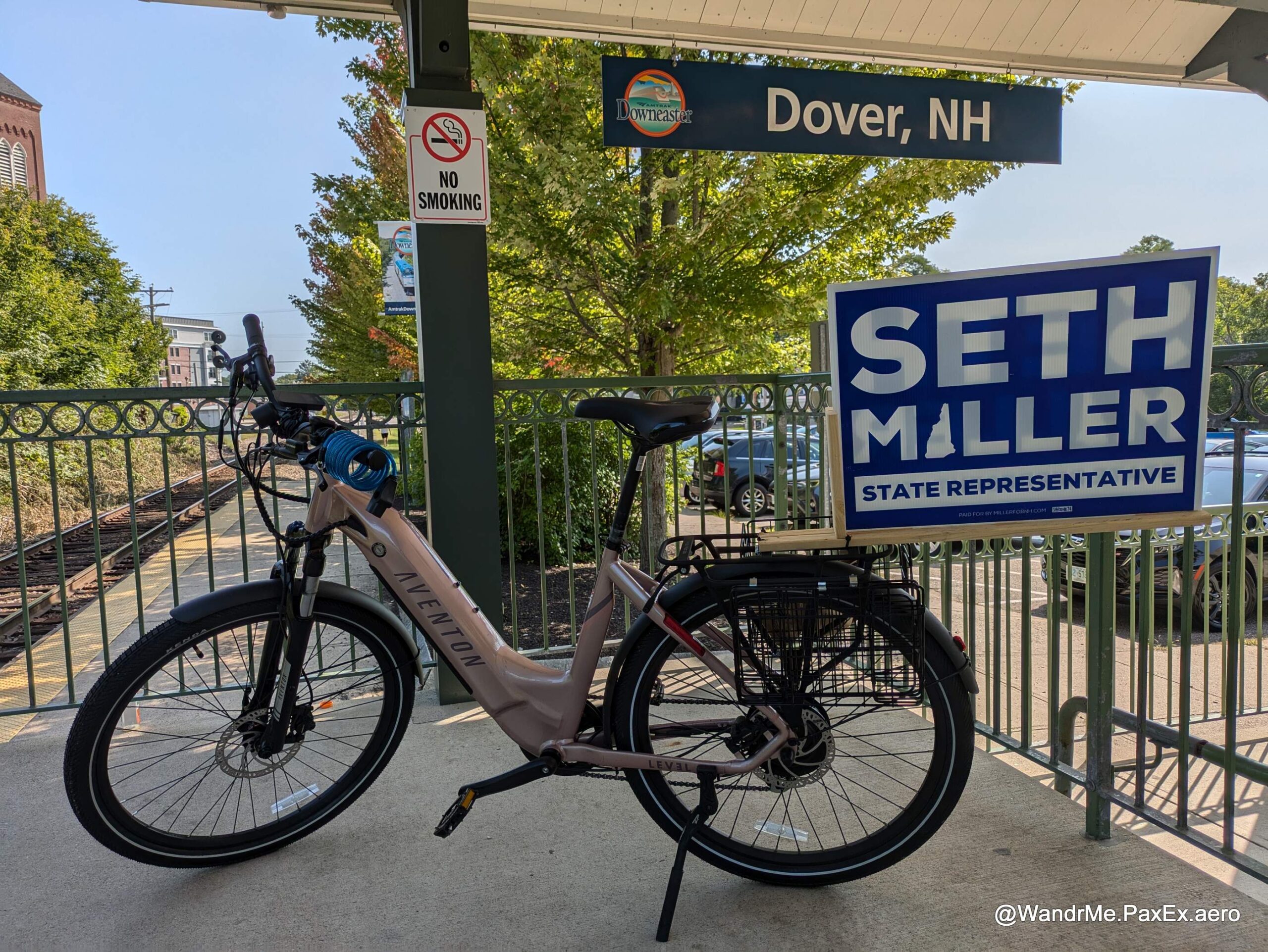
Cycling is at the fore of this year’s Transportation Committee agenda, an interesting shift from last year’s focus on car inspections and a variety of xenophobic hate bills around issuing drivers licenses. Which is to say it still presents challenges, but in a different way than a year ago. This time around it seems there’s significantly more room for debate and cooperation towards finding common ground.
Bikes, Motos, Scooters, and More
One major challenge we face with road safety is enforcement of current laws on vehicles that are not properly classified in statute. Riding a bicycle (including electric)? We have rules for that. Ditto for mopeds, motorcycles, motor-driven cycles, cars, trucks, and more.
But a motorized unicycle or stand-up scooter or electric motorbike sold as an offroad vehicle being used on the roads are – according to the DMV, State Police, and Attorney General – some other type of device to which no rules apply.
I tend towards the “I don’t care what they called it, I care what it is” version of reality, but that seems to be a losing battle right now. I spent more than a reasonable amount of time talking with the DMV and State Police, trying to understand why a two-wheeled, motorized vehicle that travels on the roads is not a moped or motorcycle (depending on top speed). The best we got to is that it is because the manufacturer says they’re not one.
That is a problem.
HB1410 aims to address this gap, to develop a new class of vehicles, known as out of class vehicles, to cover everything else. (A second bill, HB1533 is similar, but we chose to focus on the one that was better structured to get this across the finish line.)
Initially flagged as Out of Class Electric Vehicles, we’re (hopefully) dropping the electric moniker from the name and any reference to type of propulsion system from the conditions. It could be powered by fairy farts, as Linnea quipped over dinner the other night, and if it is on the roads, it still should come with some safety rules.
The very good news is that we have a consensus in the group to not change any of the existing vehicle class definitions. Bicycles – traditional or electric – should remain as they are today. Ditto for mopeds and motorcycles and cars and trucks.
And the new class is meant to be as encompassing as possible, able to include new devices as they’re invented. By accounting for them now, rather than requiring legislative action later, we’re hoping to avoid a similar enforcement gap in the future.
There’s still plenty of uncertainty about what the definitions will be and what rules will apply. A key goal is to ensure safety and traffic rules are enforced. The State Police says it cannot enforce DUI rules on these e-moto scooters today, despite them being spectacularly similar to a motorcycle in size, speed, and safety risk. We aim to close that loophole. And hopefully not create others.
Avoiding registration and operating licensure requirements makes it easier to get the bill approved. But it also opens up the potential for two “motorcycles,” each capable of traveling at 60 mph and operating on public roads, where only one requires registration and a driver’s license. That’s a pretty giant loophole we’re still debating.
I am optimistic that we’re moving towards a solid solution and I hope we can push it across the finish line.
Note: If you go read HB1410 as it exists today it does not reflect what will likely come out of the committee. We had a two-hour work session on Friday and hashed out a ton of bits to change. But it takes time to get those changes through the process. Ditto for a few of the other bills mentioned here.
Cycling Pay to Play
One of the most absurd bills this time around (HB1703) establishes an annual $50 fee to register a bicycle for use on public roads and trails. The money raised is flagged for a dedicated fund to support cycling-focused infrastructure.
And, yes, they are serious about this.
Not so serious that they think it will pass as written (I believe). But serious enough to believe that any recreational trail infrastructure should only be funded by those using the trails, rather than as part of a wholistic approach to transportation infrastructure.
Should little Billy have to pay $50 to learn to ride a bike? HB1703 would require that today. And then an additional $50 every year thereafter riding to school or on a play date in the park with friends.
Enforcement is another challenge.
It seems unlikely officers will set up inspection stations at trail heads to check documents, but theoretically that’s the best way to ensure compliance. Never mind the adverse fiscal impact it will have on surrounding communities or the troubles it will cause for out-of-state visitors. And that we don’t have dedicated staff to manage those checkpoints.
Finally, as with many similar bills, this sort of rule invites selective enforcement. A small but significant portion of New Hampshire residents rely on a bicycle as their sole means of transportation. They are generally at the bottom of the income scale and often living rough. Even if this was a good idea they do not have the $50 to spend annually to cover the fee. This just adds another reason for law enforcement to harass them and potentially pile an additional fine atop the already unreasonable collection of penalties they are subject to.
A section of NH law (§265:1-c) prohibits “use of the fact that a person rides a motorcycle or wears motorcycle-related paraphernalia as a basis for deciding to stop and question, take enforcement action, arrest, or search a person or vehicle.” Do we now need to create a similar protection for bicyclists?
Oh, and the states estimates a $400k/year cost to administer the program. The first 8,000 cyclists to pay in are just covering the overhead of supporting this inanity.
For those so inclined I encourage you to lodge an objection to this bill, either in person on 27 January in Concord on online via the remote testimony page. Choose the House Transportation committee then HB1703 and add your comments there.
Driver’s Ed and Licensing
Two other bills came up regarding how the DMV runs driving tests and how the Driver’s Ed process works.
One (HB1452) wants to allow parents to certify that they’ve provided “equivalent” training to the formal course. Never mind that most of them simply cannot. Fortunately the committee agreed that was a bad idea and voted to kill the bill.
The other (HB1111) is a more nuanced situation. It proposes to require the DMV to “provide reasonable accommodations to an applicant for a driver’s license who has an active individualized education program (IEP) from a recognized educational institution, or presents other documentation supporting the need for extended time or other testing accommodations due to a diagnosed mental or learning disability.”
On the surface this seems reasonable. Accommodations should be made where reasonable (including where English is not the driver’s primary language, the subject of a xenophobic bill last year that fortunately was killed). From a public safety perspective, however, the situation is far more complex.
Perhaps most telling was that the specific incident that precipitated the bill was rather strenuously disputed by the DMV. Parts of the scene as described should not have been possible under current policy. And the bill, as written, actually makes some things worse for those who fail the test. It is a mess.
Reining in the Tow Truck Operators
We’ve had a couple bills recently trying to address the impunity under which tow truck operations exist. They set whatever fees they want, drivers rarely can negotiate those numbers, and then if you don’t pay they can sell your car to recoup the costs and have your license suspended for up to a year if they’re still owed money. Oh, and the license suspension does not see the debt forgiven; it just screws the consumer.
HB1492 is the latest effort to address this and it still comes up short. But the tone in the room is shifting. I think there’s finally a will to change some rules and cut down on the abuses.
Can You Prove You Own Your Car?
We’re also dealing with bills around which types of vehicles should require a title to be resold, and for how long. I like that the title process protects both the buyer and seller from future fraud claims, and at a relatively reasonable price ($35). Others say it dramatically skews the used car market and, especially, that it doesn’t matter once the value of the cars drops enough. Ultimately, I believe we reached a compromise across the collection of bills on this topic, requiring them for 20 years and making them optional after that. We’ll have to see how the votes go.